Menopause Sucks
Why we really need to talk more about Menopause
Recently, I watched a great series, Riot Women. Created by the wonderful Sally Wainwright for the BBC, it tells the story of five fierce women in their fifties who form a punk band to vent their rage about ageing, menopause and the general audacity of the world.
And honestly? It blew my mind.
For most of it, I was either punching the air, shouting “YES! That’s exactly it!”, laughing in solidarity or quietly weeping into my wine. Sometimes all four at once.
Because for the first time ever, I was watching something that even came close to describing the absolute carnage that women in their forties and fifties go through during Perimenopause (hell, I didn’t even know that was a thing) and Menopause.
Unsupported.
Unheard.
Utterly unprepared.
I like to think I’m a reasonably aware woman. I read. I listen. I talk. I’m not exactly wandering through life in a bubble of ignorance.
And yet menopause hit me like a left hook from Mike Tyson.
Flat on my back. Winded. Confused. Wondering what on earth had just happened.
I was expecting vaginal dryness - because, frankly, that’s the only symptom anyone ever seems to mention. (Possibly because it’s the one that interferes with a man’s sex life, but I digress.) And yes, I knew about hot flushes.
What I wasn’t prepared for was the rest of it.
The crippling anxiety.
The panic attacks.
The claustrophobia.
The incandescent rage.
The deep, heavy, bewildering depression.
The uncontrollable sobbing.
The sudden, desperate neediness.
I had been an independent, work-hard-play-hard woman my entire adult life. Capable. Brave. Resourceful.
And suddenly I was shaking from head to foot at the thought of driving into town because it meant navigating a busy junction.
A junction.
Honestly.
Who is this woman and what has she done with the real me?
And physically? Oh, darling. Hot flushes and vaginal dryness were just the warm-up act.
Dry, desert-level eyes.
Knee joints that protested after one flight of stairs.
Heart palpitations at 3am that had me convinced this was The End.
Sleep so broken it felt like a toddler was running my nervous system.
Dizzy spells that left me wanting to throw up.
Skin that felt ninety years old.
A stomach so bloated, I thought I was growing an alien in there.
And a sex drive that had quietly packed its bags and left without so much as a forwarding address. Zero interest. Nada. Gone. Which kind of adds Grief into the mix - I had always loved loved loved sex.
And don’t forget my favourite part of Perimenopause: periods that were either a polite little spotting… or a full-scale, clotted flood worthy of a forensics team. Always occurring when you’re staying at someone else’s house, because menopause has a wicked sense of humour.
And the question that circled, over and over again:
Is it just me? Am I just weird?
Then you Google.
And you discover that roughly half the population of my age group is going to go through something similar - and yet somehow, magically, no one thought to prepare us. For any of it.
No proper conversations.
No real education.
No warning that your brain, body and identity might feel like they’re being quietly dismantled and rebuilt without your consent.
It is simply not good enough.
If men had to go through what women go through during menopause, there would be state-of-the-art hospital wings devoted to it. Specialist clinics on every corner. Prime-time documentaries. Research budgets the size of small countries.
But women?
We’re expected to smile politely, mop our brows, and just “get on with it.”
Nope.
Not good enough.
So here’s what I wish I’d known sooner… (aka the menopause survival notes I want to press into every woman’s hand sometime around her 35th birthday, along with a large gin-free tonic and a hug)
1.Keep a diary. A proper one. Religious levels of recording.
Not just the obvious things - everything.
Mood. Sleep. Palpitations. That random afternoon where you suddenly hated everyone. The dry eyes. The anxiety before driving. The nights you wake at 3:17am for no reason whatsoever.
Because when you finally sit in front of a medical professional - and your brain has dissolved into fog - that notebook becomes your evidence, your memory, your calm, articulate spokesperson.
It gives you confidence. It gives you gravitas. It stops you doing the very British thing of saying, “Oh, it’s probably nothing.”
It is not nothing.
2. Get informed - and find your people
The good news? We are the first generation with actual access to information and global sisterhood at 2am.
For me, the lifesaver was the Menopause Matters forum - a wonderful corner of the internet where women from all over the world gather to say: “Me too. Here’s what helped. You’re not losing your mind.” https://www.menopausematters.co.uk
Research links. Real experiences. Practical tips. Sanity-saving solidarity.
Knowledge is power - but in this case it’s also reassurance, language for what’s happening to you, and the ability to walk into your GP appointment as an informed collaborator rather than a confused patient.
3. HRT - a miracle for some, not suitable for others
Let me say this loudly, for the people at the back:
HRT works beautifully for some women.
It does not work for others.
And some of us land somewhere in the middle.
We are gloriously, frustratingly biologically unique. There is no one-size-fits-all.
My own route to a workable protocol took a year. A year of:
appointments
research
hope
disasters
regrouping
trying again
The first attempt? Catastrophic. Hello progesterone intolerance and a level of depression that genuinely frightened me.
I tried alternatives.
I went back.
I nearly gave up.
And then - through a combination of a brilliant menopause specialist nurse, a curious and compassionate doctor willing to think outside the box, an holistic clinic specialising in menopause (https://www.naturalhealthsurrey.co.uk/homeopathic-treatment-for-menopause), and sheer bloody-minded persistence - we found a way:
cyclical progesterone instead of daily progesterone
a whisper-low dose of medication to buffer the progesterone intolerance symptoms
homeopathic remedies coupled with Bach Flower remedies, tailormade to my needs.
Three cycles in, and my quality of life has gone from 3/10 to a solid 7/10. And I feel joy once again!
Do I feel 25? Absolutely not.
Can I now drive across that previously terrifying junction? YES. I BLOODY CAN.
And that, my friends, is victory.
It should not be this hard.
We should not have to become our own medical project managers.
But until the system catches up, persistence and self-advocacy are - frustratingly - our superpowers.
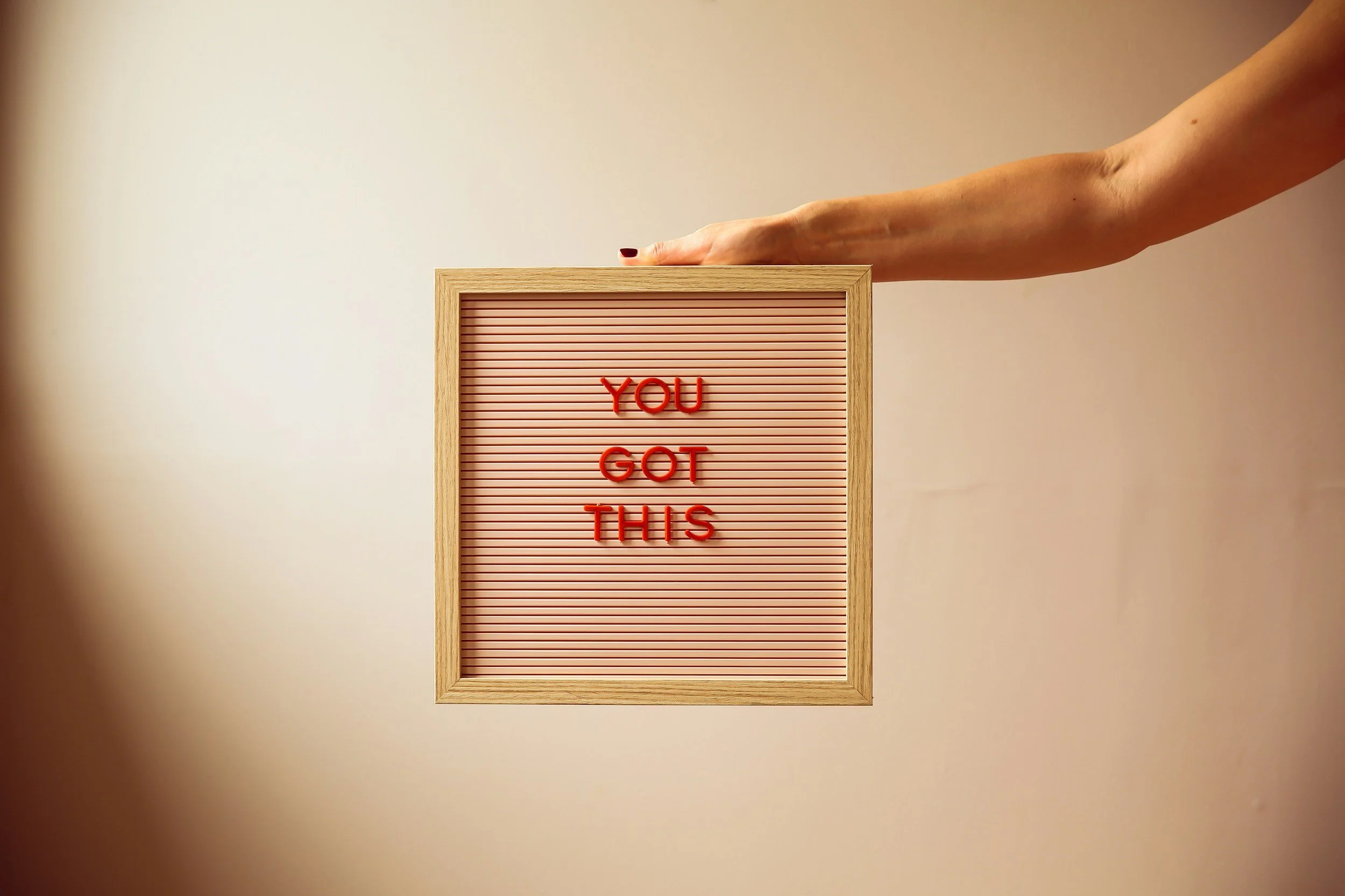
4.Find medical professionals who are curious, not dismissive
You are not “just anxious”.
You are not “getting older”.
You are not “fine, actually”.
If someone doesn’t listen - find someone who will. Compassionate, informed practitioners change lives.
5.Alcohol: the most boring plot twist of all
I know. I know.
But for many of us, alcohol + plummeting hormones =
🔥 anxiety
🔥 broken sleep
🔥 nuclear-level hot flushes
When your hormonal scaffolding is already wobbling, booze kicks it.
I reframed it not as deprivation, but as: “I just want to feel well.”
I still slip up sometimes, but generally, these days, I am better off with alcohol free drinks than my usual wine. And I am ok with that.
6.Nutritional support - worth looking into
There is a wealth of guidance out there now, and following experts in women’s nutritional health can be transformational. Think of food less as control and more as: “How do I give my changing body the resources it needs to cope?”
That mental shift alone is powerful.
My go-to source of nutritional information was Dr Marilyn Glenville’s website. A leading womens health expert, she is a great source. https://www.marilynglenville.com/womens-health-issues/menopause/
Also, don’t discount Herbal Support. Practitioners in Traditional Chinese Medicine can often help, as can Acupuncturists - both of which have helped me with symptoms over the years.
7- Follow the champions
Some people are out there fighting for us - loudly, persistently, brilliantly. Voices like Dr Louise Newson https://www.drlouisenewson.co.uk/ and Dr Amir Khan who is a frequent guest on Lorraine Kelly’s GMB Show (you can follow him on Instagram).
They are educating, campaigning, myth-busting and - crucially - making menopause a mainstream conversation.
Fill your social media with people who inform and empower you. It counteracts the decades of silence we grew up with.
And finally - the most important thing of all
You are not weak.
You are not imagining it.
You are not alone.
You are going through one of the most profound biological transitions a human body can experience - with very little societal structure around it.
Of course it floors you.
But with the right support, the right information, and a refusal to be fobbed off?
You can get back behind the wheel of your life.
Even if that life now includes:
✔ a symptom diary
✔ a supplement organiser the size of a small suitcase
✔ and an almost evangelical commitment to early nights and an alcohol free life
Wishing you all the luck in the world as you manage your perimenopause/menopause and do get in touch with any sweet tips you come across along the way. This site is all about sharing, so that we can all grow well, together.